
Last updated: October 7, 2026
Do you need a United States Importer of Record?
Find the description that matches your situation. Each one names the rule that decides who the Importer of Record (IOR) is, what the role requires today, and which parts of the 2026 customs enforcement order point at it.
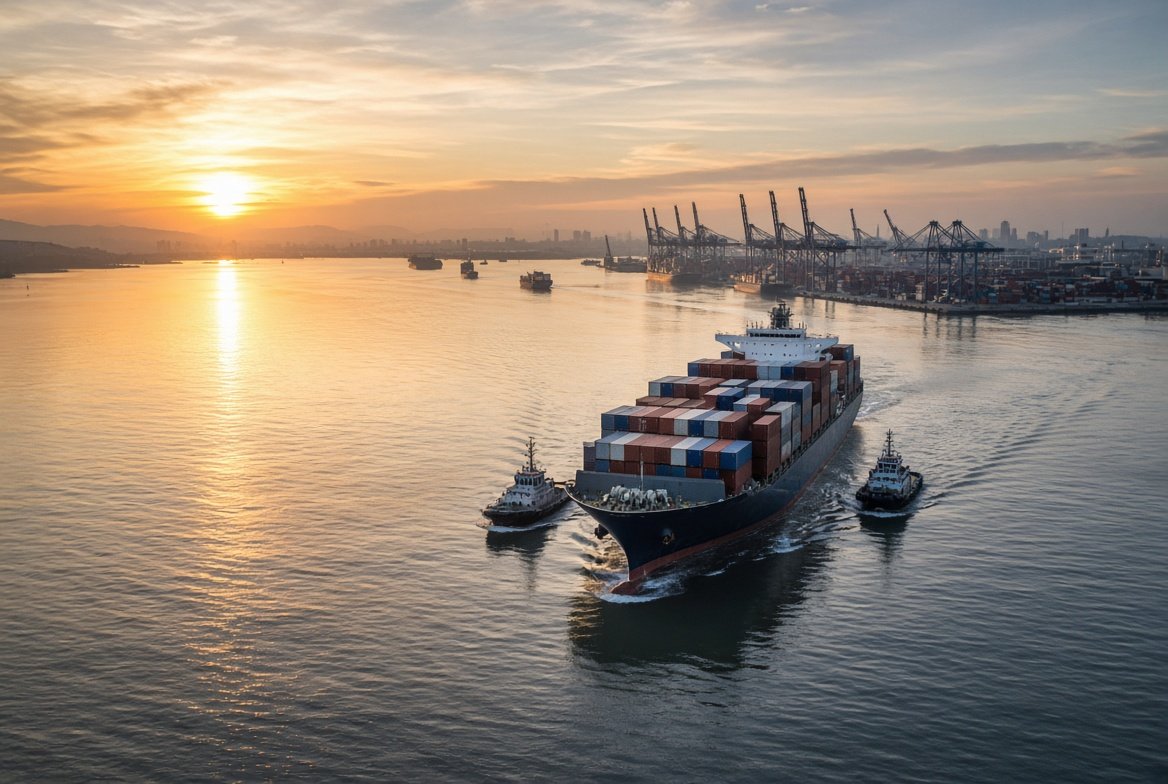
You are a foreign manufacturer selling into the United States
Your goods are made abroad and sold to US buyers. Someone has to be legally answerable to CBP for the entry, and increasingly that party needs to be a US entity that can demonstrate assets, bonding, and good standing.
The regulation that applies. Who the IOR is turns on ownership at the time of entry. Under 19 U.S.C. §1484(a)(2)(B), entry documentation is filed by the owner or purchaser of the merchandise or, when designated by the owner, purchaser, or consignee, by a broker licensed under 19 U.S.C. §1641. CBP Directive 3530-002A reads owner and purchaser to include any party with a financial interest in the transaction.
If your sales terms keep title with you until delivery in the United States, you are the IOR. If your buyer takes title before arrival, the buyer is the IOR instead.
Holding the role from abroad makes you a nonresident corporation under 19 C.F.R. §141.18, which requires a resident agent in the state of the port of entry and a bond on CBP Form 301 with a resident corporate surety. You also need an IOR number from CBP Form 5106 under 19 C.F.R. §24.5, and you carry the reasonable care obligation in 19 U.S.C. §1484(a)(1).
What the 2026 order adds. Section 2(a) of Executive Order 14411 directs CBP to require that an IOR maintain at all times a minimum level of tangible domestic assets, bonding, or both. Section 2(c) directs that a foreign IOR may not rely on a continuous bond except as permitted by CBP, and that it be validated in the Customs Trade Partnership Against Terrorism (CTPAT) if eligible. None of this is in effect yet.
What to check: who is named as Importer of Record on your current entries, and whether that party meets the requirements coming out of the 2026 rulemaking.
You are an overseas ecommerce seller
You ship to US customers directly, or into US fulfillment centers. You may have been relying on informal entry, on a carrier’s arrangement, or on your customers acting as importer.
The regulation that applies. Formal entry follows 19 U.S.C. §1484. Informal entry is the simplified route authorized by 19 U.S.C. §1498. Under 19 C.F.R. §143.21 it covers shipments not exceeding $2,500, except articles valued over $250 classified in Chapter 99, Subchapters III and IV, of the Harmonized Tariff Schedule. Under 19 C.F.R. §143.26, a shipment valued over $800 and up to $2,500 may be entered informally by its owner or purchaser or by a designated licensed broker, and a shipment of $800 or less may also be entered by its consignee.
If you send stock into a US fulfillment network and keep title until a consumer buys it, you are the IOR on those entries. Directive 3530-002A names express consignment operators and freight consolidators as nominal consignees not authorized to file entries, so a carrier’s arrangement does not move the IOR role to the carrier.
What the 2026 order adds. Section 2(b) of Executive Order 14411 directs the Secretary to issue or amend regulations to prohibit a foreign IOR from filing informal entry under 19 U.S.C. §1498. Until a rule is published, §143.21 and §143.26 govern. A separate proposed rule published October 8, 2026 would amend §143.26 so that a consignee that is not the owner or purchaser must appoint a licensed customs broker as Importer of Record, and would require a bond before any informal entry is released. It is not in effect, and it does not address the order’s foreign IOR direction.
What to check: the order directs that informal entry filing be limited to US Importers of Record. If your volume has been moving under informal entry, that route is narrowing.
You are a nonresident importer
You act as your own Importer of Record without a US entity. This has been permitted, and it is becoming harder.
The regulation that applies. 19 C.F.R. §141.18 defines a nonresident corporation as one not incorporated within the customs territory of the United States or in the U.S. Virgin Islands. It may not enter merchandise for consumption unless it has the resident agent and the resident surety bond described above. The bond carries the conditions in 19 C.F.R. §113.62, including the obligation to deposit duties, taxes, and charges when due.
What is in effect now. Under the August 19, 2026 Federal Register notice on IOR data accuracy, the Form 5106 address must be the business’s actual physical location, not a registered agent, broker, forwarder, P.O. box, or business service center, and the email and phone must belong to the IOR. Enforcement commenced September 18, 2026, and CBP voids inaccurate IOR numbers. For a nonresident, the resident agent that §141.18 requires is exactly the kind of address that cannot stand in for the importer’s own.
What to check: foreign entities face heightened requirements for formal entry under the 2026 order, directed in Section 2(c) and still in rulemaking. Confirm what your Form 5106 lists and whether your structure clears the bar being set. The nonresident importer post covers both §141.18 conditions in detail.
Your overseas supplier currently acts as Importer of Record
Common in DDP arrangements. Your supplier handles everything and you take delivery. It works right up until it does not.
The regulation that applies. Under delivered duty paid terms the seller clears the goods and pays the duties, which makes the supplier the IOR. A supplier incorporated abroad is a nonresident corporation under 19 C.F.R. §141.18. Its broker must hold a power of attorney executed directly with the supplier, not through a forwarder, under 19 C.F.R. §111.36(c)(3).
As the US buyer you are usually the consignee. Directive 3530-002A states that a nominal consignee, whose only interest comes from a shipping document, may designate a broker to make entry but may not make entry on its own behalf. Under 19 C.F.R. §141.20, the actual owner can take over liability on such an entry by filing a declaration on Customs Form 3347 and a bond on Customs Form 301 within 90 days of entry.
What the 2026 order adds. The foreign IOR directives in Sections 2(b) and 2(c) of Executive Order 14411 apply to your supplier, not to you. If they change what your supplier can do, the effect reaches your shipments.
What to check: whether your supplier can meet the asset, bonding, good standing, and vetting requirements. If they cannot, the goods stop, and it is your inventory that is sitting at the port.
You are a US importer with a working arrangement
You have a US entity, a customs broker, a continuous bond, and entries that clear without drama. You may not need an Importer of Record at all.
The regulation that applies. You are the owner or purchaser under 19 U.S.C. §1484(a)(2)(B), and §141.18 does not apply because you are incorporated in the United States. The Form 5106 accuracy enforcement in effect since September 18, 2026 applies to you as to every active IOR.
What might still be worth a look: whether your entries are filed under the correct method in the valuation hierarchy under 19 U.S.C. §1401a. That is a different question from IOR, and it is covered on the customs valuation page. The statute sets the methods in order: transaction value, identical merchandise, similar merchandise, deductive value, and computed value. Most importers file under transaction value without testing whether it is the correct method for their facts.
The five situations side by side
| Situation | Who is the IOR at entry | Main rule | 2026 order directive aimed at it |
|---|---|---|---|
| Foreign manufacturer, title passes in the US | The manufacturer | 19 U.S.C. §1484, 19 C.F.R. §141.18 | Assets or bonding minimum, foreign IOR bond and CTPAT limits |
| Overseas ecommerce seller | The seller, while it owns the stock | 19 U.S.C. §1498, 19 C.F.R. §143.21 and §143.26 | Prohibition on informal entry by a foreign IOR |
| Nonresident importer | The nonresident company | 19 C.F.R. §141.18, Form 5106 notice | Foreign IOR formal entry requirements |
| Supplier under DDP terms | The supplier | 19 C.F.R. §141.18, §141.20, §111.36(c)(3) | Every foreign IOR directive, through the supplier |
| US importer with a broker and bond | The US company | 19 U.S.C. §1484, §1401a | Assets or bonding minimum and good standing, when defined |
None of the directives in the right hand column is in effect. The one 2026 measure in effect, the Form 5106 accuracy enforcement, applies to all five situations. The 2026 customs enforcement order tracker carries the current position of each directive. CBP’s advance notice of proposed rulemaking on supply chain disclosures, opened September 2, 2026, takes comments until December 1, 2026.
Not sure which one you are
That is a common and reasonable place to be, particularly if imports are handled by a forwarder or a supplier and you have never had to look closely at the paperwork.
Three documents usually settle it: the sales terms, which show when title passes; a recent entry summary, which names the IOR; and the Form 5106 on file, which shows whose address CBP has. The foreign Importer of Record requirements post lists the facts that decide where a company stands.
Tell us what you import and how shipments reach the United States today. We will tell you which situation you are in and whether you qualify.
Frequently asked questions
Who is the Importer of Record when goods are sold on delivered duty paid terms?
Usually the seller. Under delivered duty paid terms the seller clears the goods and pays the duties, so it owns the goods at entry and holds the right to make entry under 19 U.S.C. §1484. If the seller is incorporated outside the United States, 19 C.F.R. §141.18 requires a resident agent and a bond with a resident corporate surety.
Can a freight forwarder or carrier act as Importer of Record?
Not on the strength of handling the goods. CBP Directive 3530-002A treats a party whose only interest comes from a bill of lading or other shipping document as a nominal consignee. A nominal consignee may designate a licensed customs broker to make entry but may not make entry in its own name.
Does the informal entry limit apply to foreign sellers today?
Not yet. Executive Order 14411 directs CBP to prohibit a foreign IOR from filing informal entry, and that directive is in rulemaking. Until a rule is published, 19 C.F.R. §143.21 and §143.26 govern informal entry, with a $2,500 value limit and exceptions for certain Chapter 99 articles. A separate proposed rule published October 8, 2026 would require a bond for informal entries and is also not in effect.
Does the Form 5106 accuracy enforcement apply to US importers too?
Yes. The August 19, 2026 notice covers every active Importer of Record. Since September 18, 2026 CBP voids an IOR number where the physical address, email, or phone on the Form 5106 is inaccurate or belongs to someone else, and a voided number cannot be used to enter merchandise.
Related
- What changed in 2026
- What an Importer of Record is responsible for
- Customs valuation
- How it works
- Who has the right to make entry
- Foreign Importer of Record requirements
- Nonresident importer in the United States
- US Importer of Record services, what a service IOR structure is and is not
- Importer of Record definitions, the terms that decide whose name goes on the entry
- Pharmaceutical imports: the Importer of Record under Section 232
- Steel and aluminum imports: the Importer of Record under Section 232
- Chemical imports: the Importer of Record under Section 301
- Oil and gas equipment imports: the Importer of Record under Section 232
- Drone imports: the Importer of Record under Section 232
- Do I need a US Importer of Record
- Importer of Record requirements in 2026
- Importer of Record USA: the party that makes entry and owes the duty
- Frequently asked questions
Sources
- 19 U.S.C. §1484, entry of merchandise
- 19 U.S.C. §1498, entry under regulations
- 19 U.S.C. §1401a, value
- 19 C.F.R. §24.5, filing identification number
- 19 C.F.R. §113.62, basic importation and entry bond conditions
- 19 C.F.R. §141.18, entry by nonresident corporation
- 19 C.F.R. §141.20, actual owner’s declaration and superseding bond
- 19 C.F.R. §143.21, merchandise eligible for informal entry
- 19 C.F.R. §143.26, persons who may make informal entry
- CBP Directive 3530-002A, Right to Make Entry
- Executive Order 14411, Strengthening Customs Enforcement, 91 FR 35125, June 10, 2026
- CBP, Accuracy of Importer of Record Data Submitted to CBP, Federal Register, August 19, 2026
- CBP, Heightened Import Disclosures for Supply Chain Visibility, advance notice of proposed rulemaking, September 2, 2026
This page summarizes publicly available federal actions for general information. It is not legal advice. Requirements are subject to rulemaking and change. Verify current requirements against the Federal Register and CBP guidance.
See if you qualify
Tell us what you import and how your entries are filed today, and we’ll show you where you stand.