
Last updated: October 12, 2026
Oil and gas equipment imports: who holds the Importer of Record role on tubular goods, drilling equipment, and the parts behind them
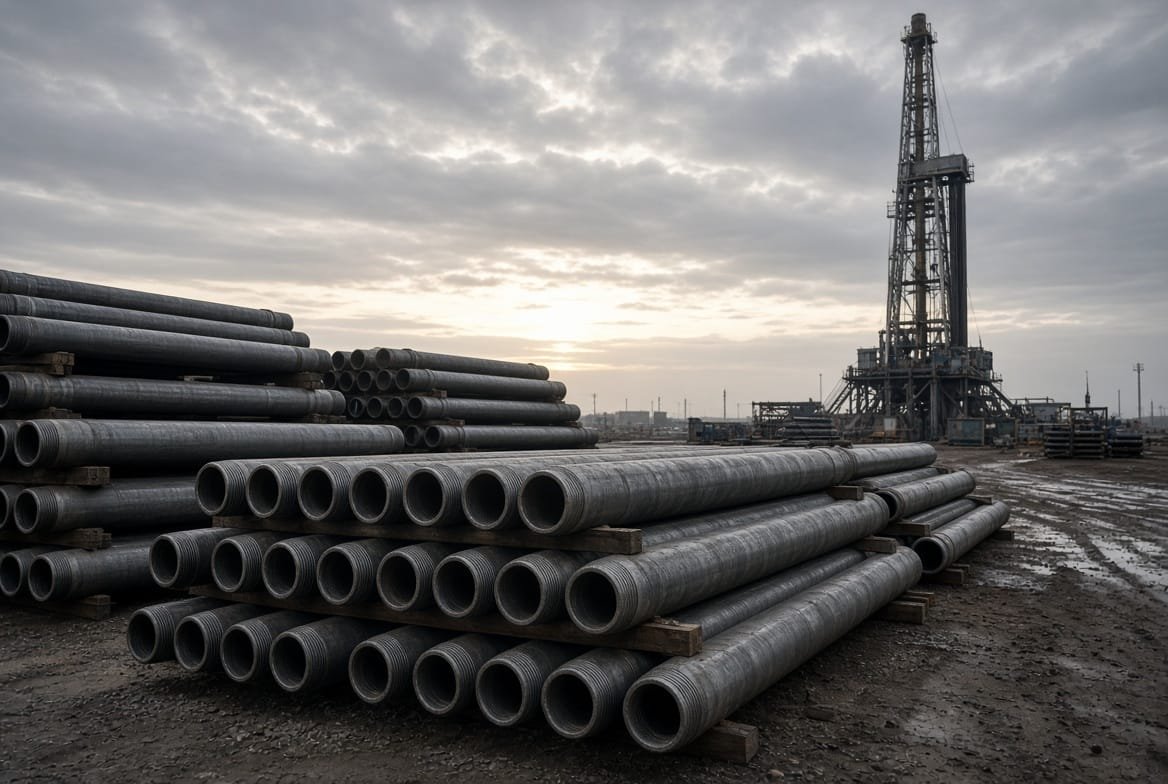
Oil country tubular goods, line pipe, drill pipe, wellhead and pressure equipment, pumps, compressors, and the parts that keep a rig running enter the United States under a Section 232 regime that, since April 6, 2026, assesses duty on the full customs value of the article. Casing and tubing carry the 50 percent steel rate. Many of the machines and parts around them sit in the derivative tiers at 50 or 25 percent, or in the combined 15 percent tier for listed trading partners. Antidumping and countervailing duties apply on top for many tubular products. The party that declares the classification, the country where the steel was melted and poured, the value, and the heading that sets the rate, and that pays all of it, is the Importer of Record (IOR). This page is for procurement, compliance, and finance leaders at operators, service companies, equipment manufacturers, and distributors who bring that equipment in. It sets out the duties in force, who typically holds the IOR role in the supply chain, what that party must declare and license, and where the 2026 customs enforcement order points.
The short version
- Oil country tubular goods and line pipe in headings 7304, 7305, and 7306 have been “steel articles” under Section 232 since Proclamation 9705 of 2018. Since Proclamation 11021 took effect on April 6, 2026 the duty is 50 percent of the full customs value, with lower tiers only for metal melted and poured in the United Kingdom or the United States.
- Drilling and production equipment entered the scope as derivative products: parts for boring and sinking machinery under 8431.43, including drill pipe fitted with tool joints and parts of offshore platforms, pumps under 8413.81, compressors under 8414.80.16, mobile drilling derricks under 8705.20, and pipe fittings under 7307.19 were added effective August 18, 2025.
- Every entry of covered steel reports the country where the steel was melted and poured, and every consumption entry or foreign trade zone admission of covered steel mill products needs a Commerce import license under 19 C.F.R. Part 360 before the entry summary is filed.
- Section 232 duties cannot be waived under a free trade agreement, drawback on them is limited, and antidumping and countervailing duties on tubular products are reported on the same entry.
- Since September 18, 2026 CBP voids IOR numbers whose Form 5106 lists a borrowed address or a third party’s contacts. A foreign mill or equipment maker acting as its own IOR is the profile that rule describes.
On this page: the duties in force, who holds the IOR role, what the IOR declares and licenses, valuation, what changed in 2026, questions.
The Section 232 duties in force on oil and gas equipment
Proclamation 9705 of March 8, 2018, published at 83 FR 11625, defined steel articles at the six digit level to include 7304.10 through 7306.90, which covers seamless and welded oil country tubular goods, line pipe, and other tubes and pipes. Proclamation 10947 of June 3, 2025 raised the rate from 25 to 50 percent effective June 4, 2025. Proclamation 11021 of April 2, 2026, published at 91 FR 18201, rebuilt the regime effective April 6, 2026: its first clause provides that the duties apply to the full customs value of the imported product regardless of metal content, and its annexes set the rates by tier. Proclamation 11032 of June 1, 2026, published at 91 FR 34085 and effective June 8, 2026, added the combined 15 percent tier for products of listed trading partners and the Canada and Mexico content rule. CBP’s filing guidance is CSMS #68253075 of April 3, 2026 and CSMS #68855869 of June 5, 2026.
What that means for the equipment on a rig:
| Equipment | Where it sits | What applies |
|---|---|---|
| Casing, tubing, drill pipe blanks, line pipe (7304, 7305, 7306) | Steel articles under Proclamation 9705 | 50 percent of full customs value under heading 9903.82.02, or 25 percent for United Kingdom melted and poured steel |
| Drill pipe fitted with tool joints, tool joints, parts of boring and sinking machinery, parts of offshore drilling and production platforms (8431.43) | Derivative products added August 18, 2025 | The derivative tier CBP’s guidance assigns to the classification, on full customs value |
| Pumps and parts (8413.81, 8413.91), compressors (8414.80.16, 8414.30.40) | Derivative products added August 18, 2025 | The derivative tier CBP’s guidance assigns to the classification |
| Mobile drilling derricks and other special purpose vehicles (8705.10, 8705.20, 8705.90) | Derivative products added August 18, 2025 | The derivative tier CBP’s guidance assigns to the classification |
| Pipe fittings (7307.19) and towers and lattice masts (7308.20) | Derivative products added August 18, 2025 | The derivative tier CBP’s guidance assigns to the classification |
| Valves (8481) | Not among the August 2025 additions | Column 1 rate, plus any derivative heading added later by Federal Register notice |
The August 18, 2025 additions came through the Bureau of Industry and Security notice at 90 FR 40326, which added 407 classifications as steel and aluminum derivatives. Proclamation 11021 ended that petition process and provides that the Secretary of Commerce and the United States Trade Representative may add further derivative articles on a rolling basis by Federal Register notice, so the right hand column of this table can change on a published date. The steel and aluminum page carries the full heading table, the United Kingdom, United States metal, and Canada and Mexico tiers, and the January 1, 2028 transition.
Three further points sit on top of the Section 232 duty. CBP’s FAQ states that Section 232 duties may not be waived due to a free trade agreement and that GSP and AGOA may not be claimed on these entries. Manufacturing drawback under 19 U.S.C. §1313(a) and (b) is available only for articles in the second and third annexes of Proclamation 11021 that are products of a trade agreement partner with metal melted and poured in a trade agreement partner, and no other drawback is available. And antidumping and countervailing duties continue to apply, which CBP’s guidance states expressly; oil country tubular goods and line pipe from a number of countries are covered by orders, and the deposit rates attach to the same entry.
The temporary import surcharge under section 122 of the Trade Act of 1974, imposed by Proclamation 11012 at 10 percent from February 24, 2026, did not apply in addition to Section 232 duties and exempted energy and energy products. Executive Order 14389 of February 20, 2026 ended the duties that had been imposed under the International Emergency Economic Powers Act, and CBP processes refunds of those duties to the Importer of Record through its CAPE declaration process. Section 232 and Section 301 duties were unaffected by that order.
Who holds the Importer of Record role in an oil and gas supply chain
On every formal entry one party is named as Importer of Record. Under 19 U.S.C. §1484 that party must be the owner or purchaser of the goods, or a licensed customs broker they designate, and it carries the duties, the bond, the records, and the reasonable care obligation. In oilfield supply the role sits in one of three places.
The foreign mill or equipment maker, selling delivered duty paid
A tube mill or equipment manufacturer abroad enters the goods in its own name as a nonresident importer under 19 C.F.R. §141.18, with a resident agent and a bond from a resident surety. It owes 50 percent of the full value of its own casing and tubing, holds the steel import license, reports its own melt and pour country, and carries any antidumping or countervailing deposit. Its Form 5106 is the one the September 18, 2026 accuracy enforcement examines.
The operator, service company, or distributor
An operator, drilling contractor, oilfield service company, or distributor buys the goods and enters them, often through a foreign trade zone or a port near the basin. The declared value is its purchase price, or a related party price where the mill is an affiliate, and it is this party that claims any reduced heading, reports melt and pour, and answers a CBP request for the mill certificates behind the report.
A United States Importer of Record provider
Where neither the producer nor the buyer holds the role, a United States company with the right to make entry is named on the entry under a shipment-specific authorization. The provider holds its own IOR number, bond, license registration, and records, and it must be able to support the melt and pour report, the classification, and the value on every line, including the antidumping and countervailing duty declarations.
Which party holds the role decides who carries a duty that is now larger than the price of many of the goods it attaches to, and who answers for the antidumping and countervailing declarations that CBP examines most closely on tubular products. The who needs a United States Importer of Record page compares the situations side by side.
What the Importer of Record must declare and license on an oilfield entry
The steel import license. Under 19 C.F.R. §360.101, all entries for consumption of covered basic steel mill products, and all admissions of covered products into a foreign trade zone, require a Commerce Department steel import license before the entry summary or admission documents are filed. Informal entries are exempt. Under 19 C.F.R. §360.103 the application reports the importer, exporter, and manufacturer, the country of origin, the Chapter 72 or 73 classification, the quantity in kilograms, the customs value, and the country where the steel was melted and poured. A license is valid for 75 days.
Melt and pour. CBP’s guidance directs filers to continue reporting the countries of melt and pour for all subject steel and steel derivative products, following CSMS 64348411, 64348288, and 65340246, and the CBP FAQ states that ACE requires the melt and pour country on any line with a derivative classification even where the article contains no covered steel. Under 19 C.F.R. §360.103 the country of melt and pour is where the raw steel was first produced in a liquid state in a steel making furnace and poured into its first solid shape. For tubular goods that is the mill that cast the billet or slab, which is not always the mill that rolled, threaded, or coupled the pipe.
Classification and antidumping and countervailing declarations. Oil country tubular goods, line pipe, and drill pipe are classified by process, alloy, wall thickness, and outside diameter, and the same classification decides whether an antidumping or countervailing duty order applies and at what deposit rate. The Importer of Record declares the case number and rate on the entry, posts the deposit, and holds the entry open until liquidation.
Foreign trade zones. Products subject to Proclamation 11021 admitted to a foreign trade zone on or after April 6, 2026 must be admitted in privileged foreign status under 19 C.F.R. §146.41 unless eligible for domestic status under 19 C.F.R. §146.43, and the license requirement applies at admission.
Reasonable care and records. Under 19 U.S.C. §1484(a)(1) the IOR must use reasonable care in classifying the goods, declaring their value, and determining the rate of duty. Under 19 U.S.C. §1508 and 19 C.F.R. Part 163 it keeps the entry, the mill test certificates and origin documents behind the melt and pour report, the license, the antidumping and countervailing declarations, and the commercial documents for five years, and produces them under 19 U.S.C. §1509. Penalties under 19 U.S.C. §1592 attach to the Importer of Record.
Valuation decides the duty
A 50 percent duty on full customs value, with antidumping or countervailing deposits on top, makes the declared value the largest number on an oilfield entry. Under 19 U.S.C. §1401a the customs value follows a sequential hierarchy of methods beginning with transaction value, the price actually paid or payable when sold for export to the United States, with statutory additions for assists such as tooling, dies, and engineering supplied by the buyer, for royalties, and for proceeds, and with exclusions for charges that are not part of the price of the goods, such as international freight and insurance where they are separately identified.
Oilfield procurement puts the method in play in three ways. Equipment bought from a related mill or an affiliate’s trading company is a related party transaction, and transaction value applies only where the relationship did not influence the price. Goods bought under master supply agreements with volume rebates, inspection and testing charges, or threading and coating performed by a third party raise the question of what is part of the price and what is not. And where transaction value cannot be used, the statute moves in order through the transaction value of identical or similar merchandise, deductive value, computed value, and the fallback method under 19 U.S.C. §1401a(f). The customs valuation page walks through each method and what CBP examines. Whichever method applies, the Importer of Record declares it, and establishing and documenting the correct value is work done before importation.
What changed in 2026 for oil and gas importers
The duty base changed from steel content to full customs value on April 6, 2026, which matters most for the machinery and parts in the derivative tiers, where steel is a fraction of the value. The scope grew through the August 2025 additions and the June 2026 annexes, and rolling additions by Federal Register notice replaced the petition process. The general tariff landscape moved when Executive Order 14389 ended the duties imposed under the International Emergency Economic Powers Act and Proclamation 11012 imposed a temporary surcharge that did not reach Section 232 goods or energy products.
Executive Order 14411, Strengthening Customs Enforcement, signed June 3, 2026 and published at 91 FR 35125, directs minimum tangible domestic assets or bonding for Importers of Record, heightened formal entry requirements for foreign entities, a good standing requirement with increased vetting, and a 50 percent minimum penalty floor. As of October 12, 2026 those directives remain in rulemaking with no effective date. The Form 5106 accuracy enforcement under the order has been in effect since September 18, 2026. The enforcement order tracker carries the current position of each directive. A foreign mill entering tubular goods under a 50 percent duty and an antidumping deposit is the kind of importer the bonding and vetting directives describe.
See if your shipments qualify
Tell us what you import, which headings your entries are filed under, and who holds the Importer of Record role today. We reply to your work email within one business day. The full form has room for more detail.
Frequently asked questions
Is oil country tubular goods casing a Section 232 steel article or a derivative?
A steel article. Proclamation 9705 defined steel articles to include headings 7304.10 through 7306.90, which cover seamless and welded casing, tubing, and line pipe. Since April 6, 2026 the duty is 50 percent of the full customs value, or 25 percent where the steel was melted and poured in the United Kingdom.
Does the duty apply to drill pipe and tool joints?
Drill pipe blanks in heading 7304 are steel articles. Drill pipe fitted with tool joints, tool joints, and other parts for boring and sinking machinery under 8431.43 were added as derivative products effective August 18, 2025 under the Bureau of Industry and Security notice at 90 FR 40326, and since April 6, 2026 the duty on them is assessed on the full customs value of the article.
Who needs a steel import license for tubular goods?
Under 19 C.F.R. §360.101 every consumption entry and every foreign trade zone admission of covered basic steel mill products requires a Commerce license before the entry summary is filed. Only informal entries are exempt. The license reports the country of melt and pour and is valid for 75 days.
Do antidumping and countervailing duties apply on top of Section 232?
Yes. CBP’s Section 232 guidance states that antidumping and countervailing duties continue to apply, and they are declared and deposited on the same entry by the Importer of Record.
Can a foreign tube mill still be its own Importer of Record?
Yes, under 19 C.F.R. §141.18, with a resident agent in the state of the port of entry and a bond from a resident corporate surety. Since September 18, 2026 its Form 5106 must list its own address and contacts or CBP voids the IOR number, and Executive Order 14411 directs further requirements for foreign entities that remain in rulemaking.
Related
- Steel and aluminum imports: the Importer of Record under Section 232
- What an Importer of Record is responsible for
- Customs valuation under 19 U.S.C. §1401a
- Who needs a US Importer of Record
- Pharmaceutical imports: the Importer of Record under Section 232
- What changed in 2026: the enforcement order tracker
- Nonresident importer in the United States
- How it works
Sources
- Proclamation 9705, Adjusting Imports of Steel Into the United States, 83 FR 11625, March 15, 2018
- Proclamation 10947, Adjusting Imports of Aluminum and Steel Into the United States, 90 FR 24199, June 9, 2025
- Bureau of Industry and Security, Adoption and Procedures of the Section 232 Steel and Aluminum Tariff Inclusions Process, 90 FR 40326, August 19, 2025
- Proclamation 11021, Strengthening Actions Taken To Adjust Imports of Aluminum, Steel, and Copper Into the United States, 91 FR 18201, April 9, 2026
- Proclamation 11032, Further Adjusting the Tariff Regimes for Imports of Aluminum, Steel, and Copper Into the United States, 91 FR 34085, June 4, 2026
- CBP, CSMS #68253075, Guidance: Section 232 Duties on Imports of Aluminum, Steel, and Copper, April 3, 2026
- CBP, CSMS #68855869, Guidance: Further Adjusting the Tariff Regimes for Imports of Aluminum, Steel, and Copper, June 5, 2026
- CBP, Section 232 Steel and Aluminum Articles FAQs
- Proclamation 11012, Imposing a Temporary Import Surcharge To Address Fundamental International Payments Problems, 91 FR 9339, February 25, 2026
- Executive Order 14389, Ending Certain Tariff Actions, 91 FR 9437, February 25, 2026
- CBP, IEEPA Duty Refunds
- 19 C.F.R. §360.101, steel import licensing
- 19 C.F.R. §360.103, automatic issuance of import licenses
- 19 U.S.C. §1484, entry of merchandise
- 19 U.S.C. §1401a, value
- 19 U.S.C. §1508, recordkeeping
- 19 U.S.C. §1592, penalties
- 19 C.F.R. §141.18, entry by nonresident corporation
- Executive Order 14411, Strengthening Customs Enforcement, 91 FR 35125, June 10, 2026
- CBP, Accuracy of Importer of Record Data Submitted to CBP, Federal Register, August 19, 2026
This page summarizes publicly available federal actions for general information. It is not legal advice. Requirements are subject to rulemaking and change. Verify current requirements against the Federal Register and CBP guidance.
See if you qualify
Tell us what you import and how your entries are filed today, and we’ll show you where you stand.